Annaprashan sanskar
Annaprashan is the first-feeding sanskar, done at the house. The family keeps the food they want offered. The pandit does the worship around that feeding.
Annaprashan sanskar
अन्नप्राशन संस्कार
The rite
Annaprashan is the first-feeding samskara when a baby tastes sanctified kheer or rice for the first time, surrounded by close family in the living room. Pandit Mrityunjay Sharma conducts the North Indian vidhi at your Bengaluru home: kalash, gentle Devi remembrance, and the moment a parent offers the first spoon. The rite suits apartments where a small mandap fits beside the sofa, and the pandit paces mantra so the infant is not overwhelmed by smoke or loud bells.
Time at the house: About 1 to 1.5 hours
Pandit Mrityunjay Sharma performs this as a home visit in Bengaluru. Share your area and preferred slot on WhatsApp; the samagri list is sent before the day. This page does not list fees or promise worldly results.
Why families book it
Parents book when they want mantra and altar setup, not only a casual photo session with store-bought kheer.
A home visit lets maternal and paternal grandparents take turns feeding without temple queue pressure or fixed temple meal rules.
When families ask
- After the sixth month when your family pandit agrees on the day
- On the child's janma nakshatra if elders prefer that calendar
- Before daycare begins and relatives are in town for one gathering
- When Marathi Mukhe Bhaat and Hindi annaprashan need one agreed script
- During a festival week for convenience, not because the date promises health
- When you want allergy-safe kheer ingredients confirmed on WhatsApp first
Before the day
Cook plain kheer without nuts if the paediatrician asked for that. Lay a washable cloth under the baby seat because turmeric and rice grains spill easily. Keep bibs, wipes, and a favourite toy within reach. Tell the pandit who feeds first—mother, father, or grandmother—so sankalp names match. Park the prasad plates away from the infant's grab range until the feeding moment.
Short vidhi
- Sankalp with baby and parents' names and gotra if known
- Ganesh and gentle Lakshmi invocation
- Kalash sthapana near Devi or Annapurna image
- Mantra for sanctifying the kheer pot
- Tulsi leaf placed on the offering
- First spoon from the parent chosen by elders
- Optional second feeding by grandparent
- Small tilak on the baby's forehead with wet rice
- Blessing words without promising medical outcomes
- Arati waved at safe distance from the infant
- Prasad cups for guests and note on storing leftover ritual food
The pandit confirms the order on WhatsApp before the visit.
Samagri
- Fresh kheer: rice, milk, sugar
- Tulsi leaf
- Small copper or steel bowl for baby portion
- Brass kalash and coconut
- Mango leaves
- Devi or Annapurna photo
- Ganesh murti or image
- Flowers and soft garland
- Incense, lamp, and camphor
- Banana and seasonal fruit
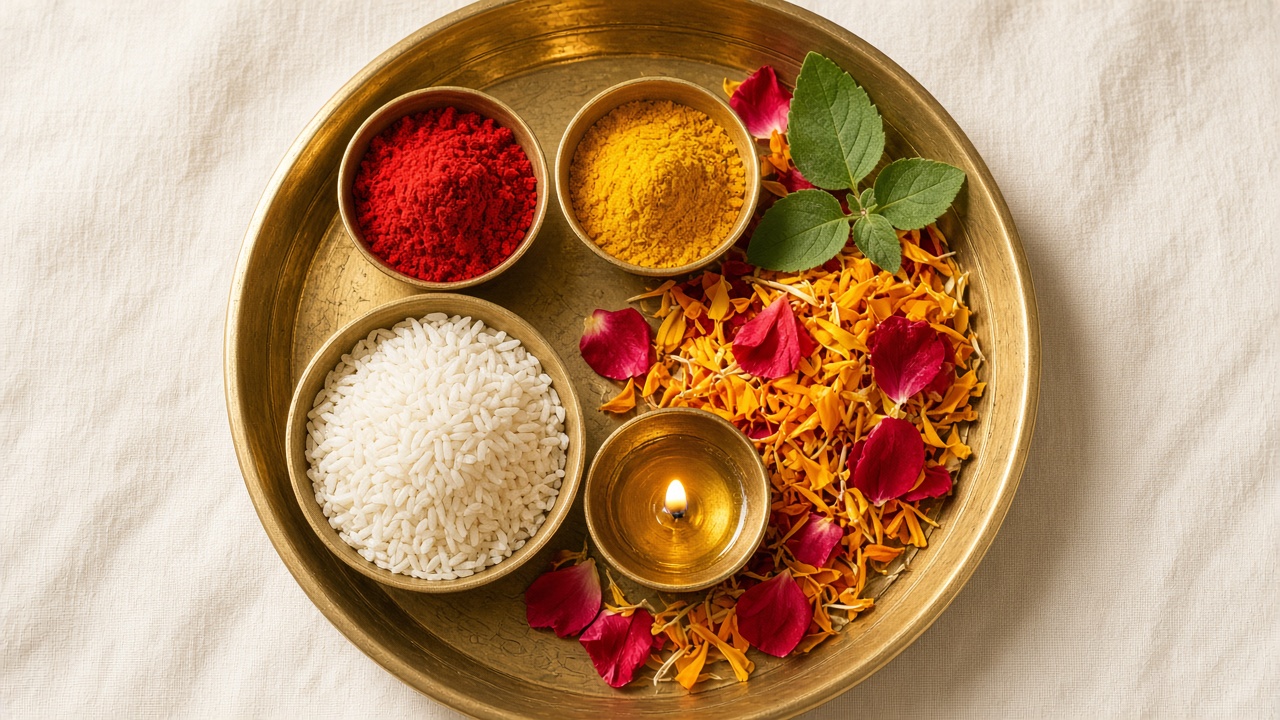
- Akshata rice, roli, haldi
- Red altar cloth and baby traditional dress
The exact list for your day is sent on WhatsApp. This page does not sell a kit, and it does not say the materials are included in a fee.
Questions
Boy or girl—same vidhi?
Yes; sankalp names change, structure stays the same.
Brown rice kheer allowed?
Only if texture is age-appropriate and the doctor approves.
Can only father perform?
Yes when mother is unwell; mention it when you book.
Photographs during mantra?
Flash after the feeding moment is fine; follow the pandit's cue for silence.
Guest lunch after?
Separate from the baby's first portion; plan satvik meal yourself.
Temple versus home?
Home keeps the baby on a familiar nap schedule.