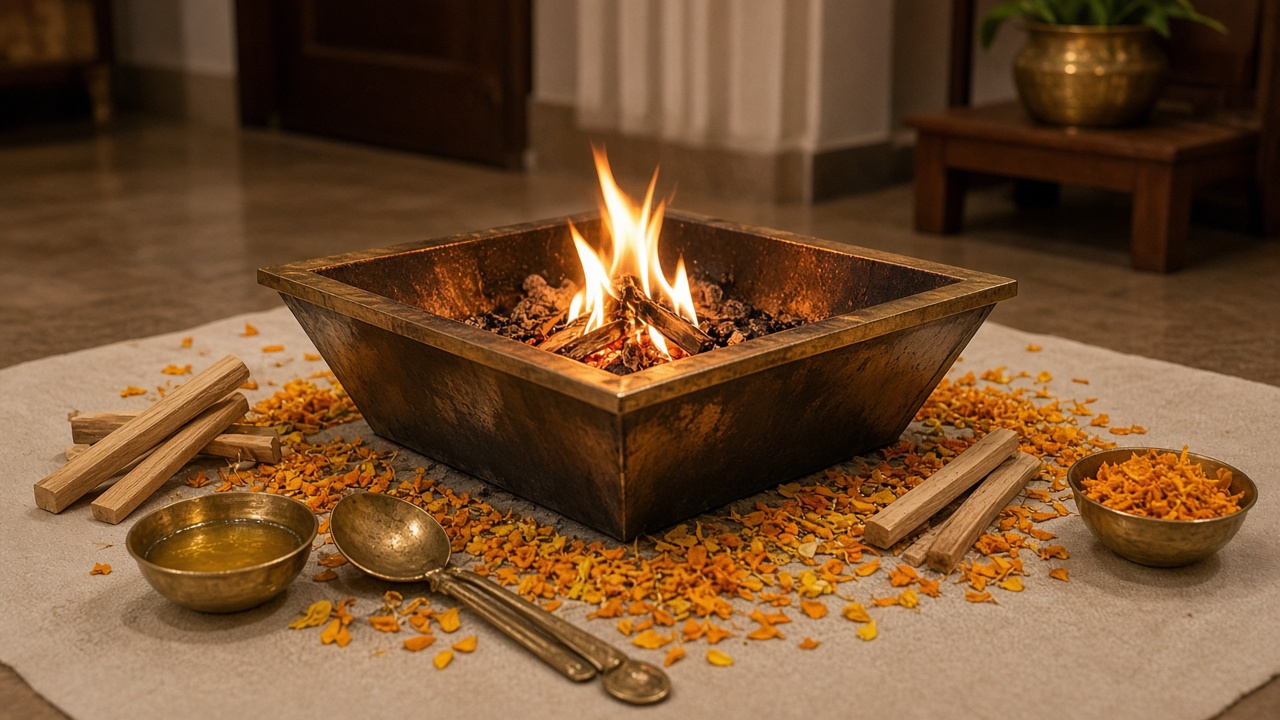
Durga Saptashati Path
Saptashati Path is the recitation of the Durga Saptashati—also called Chandi Path or Devi Mahatmyam—thirteen chapters praising Goddess Durga’s victories over evil forces. Families
Durga Saptashati Path
सप्तशती पाठ
The rite
Saptashati Path is the recitation of the Durga Saptashati—also called Chandi Path or Devi Mahatmyam—thirteen chapters praising Goddess Durga’s victories over evil forces. Families book it at home during Navaratri, before travel, or on personal sankalp days when they want uninterrupted chanting led by a pandit. Pandit Mrityunjay Sharma may complete the full path in one long sitting or across scheduled sessions in your Bengaluru home. Allow about thirty minutes before the start for altar layout and for the pandit to review the samagri you arranged from the WhatsApp list. Families across Whitefield, HSR Layout, Sarjapur Road, Indiranagar, Electronic City, Bellandur, and Hebbal often schedule on weekends when relatives can attend.
Time at the house: 3–4 hours continuous; split over 2–3 days if preferred
Pandit Mrityunjay Sharma does this at the house in Bengaluru. The fee is not printed on this page. It is sent on WhatsApp with the material list.
Why families book it
The text is long and Sanskrit-heavy; a trained reciter keeps adhyaya order, pronunciation, and breaks for arati correct. Home path allows women and children to listen without temple timing limits.
Devi worship is for courage and dharma in tradition; it is not sold here as protection from specific lawsuits, enemies, or illnesses.
When families ask
- Navaratri nine nights with daily or consolidated Saptashati
- Before daughter’s wedding as Devi blessing in many families
- Masik Ashtami or Chaitra Navratri home observance
- Personal vow after frightening experience—as prayer, not fear marketing
Short vidhi
- Kalash sthapana and Devi invocation
- Sankalp with family names and reason in general terms
- Ganesh and Guru vandana
- Chapter-wise Saptashati recitation with brief pause each adhyaya
- Kumkum archana or flower offering at chapter breaks
- Devi arati and durga saptashloki if time
- Havan option: concluding Chandi ahutis if booked
- Prasad and visarjan of kalash
The pandit confirms the order on WhatsApp before the visit.
Samagri
- Devi idol or picture on red cloth
- Saptashati book or printed chapters
- Kumkum, turmeric, rice, flowers
- Coconut, betel leaves, fruits
- Kalash, mango leaves, red thread
- Ghee lamp and incense
- Camphor for arati
- Red chunri for deity
- Optional havan samagri for closing homa
- Water, copper vessel
- Prasad: halwa or puri-halwa if tradition
- Comfortable seating for listeners
- Extension cord and quiet room
The exact list for your day is sent on WhatsApp. This page does not sell a kit and does not say materials are included in a fee.
Questions
Must all thirteen chapters be done in one day?
Ideal but not mandatory. Multi-day schedule is common for working families.
Is paath the same as Chandi homam?
Path is recitation. Chandi homam adds fire. You can book path alone or path ending with homa.
Can ladies read along?
Yes. Many families join refrains; pandit leads main chant.
Navaratri all nine days?
Possible as package of visits. Plan calendar on WhatsApp.
Need fasting?
Some fast till path ends; others eat light. Health first for diabetics and elders.
Hindi or Sanskrit?
Text is Sanskrit; explanations can be Hindi or English between chapters if requested.
Children in room?
Allowed; long sitting may bore young kids—plan a quiet play area nearby.